
In an unusually strong and profanity-laced social media statement on Easter Sunday, U.S. President Donald Trump issued a stark warning to Iran, threatening severe consequences if the nation did not ensure the free passage through the Strait of Hormuz. The president’s remarks, which included personal insults directed at Iranian leaders, also hinted at potential widespread strikes against Iranian infrastructure and an expectation of a swift "deal" with Tehran by the following day, Monday.
Key points
- Threats of "Hellfire": President Trump warned Iran of impending "hell" and "power plant day, and bridge day, all wrapped up in one" if the Strait of Hormuz remained closed.
- Profane Language: The president's social media post was notable for its use of vulgar language, leading news outlets to fact-check its authenticity.
- Deal Expectations: Despite the aggressive rhetoric, Trump also expressed an expectation of a "deal" with Iran by Monday, claiming negotiations were underway with some Iranian leaders who had been granted amnesty.
- Infrastructure Targets: U.S. administration officials reportedly discussed targeting electric power plants and transportation networks, arguing their dual-use military value.
- International Concern: The potential U.S. strategy has sparked debate among policy experts and international observers, raising concerns about humanitarian consequences and violations of international law.
- Iranian Defiance: Iran responded defiantly through state media, suggesting no official talks were taking place and dismissing U.S. interlocutors as engaging with opposition forces.
What we know so far
On Easter Sunday, U.S. President Donald Trump posted a highly aggressive message on social media, threatening Iran with severe repercussions if it did not open the Strait of Hormuz. He referred to Iranian leaders using derogatory terms and explicitly stated, "Tuesday will be Power Plant Day, and Bridge Day, all wrapped up in one, in Iran. There will be nothing like it!!! Open the F*****’ Strait, you crazy b*******, or you’ll be living in Hell - JUST WATCH! Praise be to Allah.” The unusual tone and language prompted media outlets to confirm the post's authenticity. This outburst occurred shortly after a successful operation to rescue an American airman stranded in the Iranian desert.
Following his social media post, Trump stated in a telephone interview with Fox News that he anticipated making a deal with Iran on Monday and that his team was negotiating with certain Iranian leaders who had reportedly received amnesty. He further warned, "If they don’t make a deal and fast, I’m considering blowing everything up and taking over the oil. You’re going to see bridges and power plants dropping all over their country."
Iran's state media subsequently posted defiant messages on social media, implying that no official talks were occurring and that any U.S. interlocutors might be engaging with opposition groups Washington hoped would overthrow the current Iranian government. Earlier, Trump had also issued a "48 hours before all Hell will reign (sic) down on them" warning to Iran, suggesting expanded strikes on infrastructure.
U.S. forces had previously targeted a significant bridge connecting Tehran to Karaj, a video of which was shared by Trump. Iranian media reported civilian casualties from this strike. Administration officials have reportedly discussed additional strikes on electric power plants and transportation networks, justifying these targets as having dual-use military value, supporting missile and drone logistics. The U.S. has also attacked steel plants in Iran.
Context and background
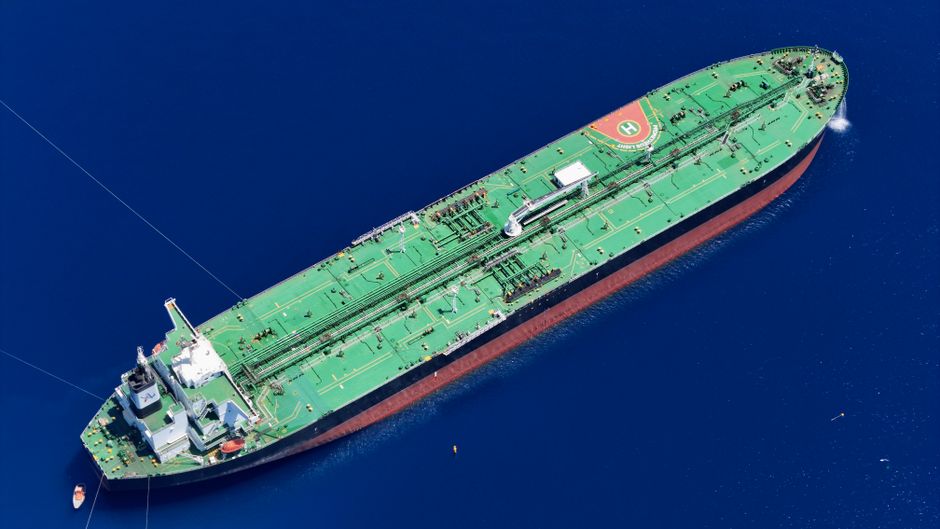
The Strait of Hormuz, a narrow waterway connecting the Persian Gulf to the open ocean, is one of the world's most critical chokepoints for oil shipments. An estimated 20% of the world's petroleum, and a significant portion of liquefied natural gas, passes through this strait daily. Any disruption to traffic in this area can have immediate and severe implications for global energy markets and the world economy. Iran has, in the past, threatened to close the strait in response to international sanctions or military pressure, leveraging its strategic geographical position.
Tensions between the United States and Iran have been historically high, particularly since the U.S. withdrew from the Joint Comprehensive Plan of Action (JCPOA), commonly known as the Iran nuclear deal, in 2018. Following the withdrawal, the U.S. reimposed and intensified sanctions on Iran, aiming to cut off its oil exports and pressure Tehran into new negotiations over its nuclear program, ballistic missile development, and regional activities. Iran, in turn, has gradually reduced its commitments under the nuclear deal and engaged in actions perceived as provocative by the U.S. and its allies, including alleged attacks on oil tankers and downing of drones.
The debate within U.S. policy and legal circles regarding targeting civilian infrastructure is significant. Proponents within the Pentagon argue that in modern warfare, the distinction between civilian and military infrastructure has become blurred. They contend that degrading these systems, such as power grids and transportation networks, is essential to limit an adversary's capacity to wage war, develop advanced weaponry like drones and missiles, and project power. Such infrastructure can directly support military logistics, command and control, and weapons production.
However, critics vigorously counter that widespread infrastructure attacks risk violating fundamental principles of international humanitarian law (IHL), specifically the principles of proportionality and distinction. The principle of distinction requires parties to a conflict to distinguish between combatants and civilians, and between military objectives and civilian objects, directing attacks only against military objectives. The principle of proportionality dictates that even if a target is military, an attack is unlawful if the expected civilian casualties or damage to civilian objects would be excessive in relation to the concrete and direct military advantage anticipated. Targeting infrastructure that is essential for the survival of the civilian population, such as water treatment plants or hospitals, could be considered a war crime.
Moreover, opponents warn of the strategic risks. Such actions could backfire, hardening Iranian public opinion against the U.S. and strengthening the resolve of the current regime, rather than weakening it. It could also lead to a humanitarian crisis, exacerbating the suffering of an already vulnerable Iranian population due to sanctions and economic hardship, potentially creating a new wave of instability and refugee flows. The international community, particularly European analysts and humanitarian organizations, has expressed deep concern about the potential for escalation and the cascading effects on essential services like water, healthcare, and food supplies.
What happens next
The immediate aftermath of President Trump's statements suggests a period of heightened uncertainty and potential for escalation. While Trump expressed an expectation of a "deal" with Iran, the public response from Iranian state media indicates a lack of official engagement, creating a contradiction that needs to be resolved. Observers will be watching closely for any confirmed diplomatic overtures or, conversely, for any further military actions or threats from either side.
The international community, including European nations, is likely to continue advocating for de-escalation and diplomatic solutions, given the potential for a wider conflict in the Middle East. Humanitarian organizations will remain vigilant, ready to respond to any crisis that might arise from targeted infrastructure attacks. The internal U.S. debate over military strategy and international law is also expected to persist, influencing future policy decisions regarding engagement with Iran.
FAQ
- What is the Strait of Hormuz? It's a narrow, strategically vital waterway connecting the Persian Gulf to the open ocean, through which a significant portion of the world's oil supply passes.
- Why did Trump use such strong language? The exact reasons are not confirmed, but analysts have surmised it could stem from frustration over the inability to overpower Iran, despite a recent successful rescue operation.
- Are the U.S. and Iran currently negotiating? President Trump stated his team was negotiating with certain Iranian leaders, but Iran's state media has denied any official talks. The situation remains unconfirmed.
- What are the concerns about targeting infrastructure? Critics warn that targeting civilian infrastructure could violate international humanitarian law, particularly principles of proportionality and distinction, and could lead to severe humanitarian consequences for the civilian population.
- Has the U.S. attacked Iranian infrastructure before? The U.S. has reportedly targeted a key bridge and steel plants in Iran, with administration officials discussing further strikes on power plants and transportation networks.