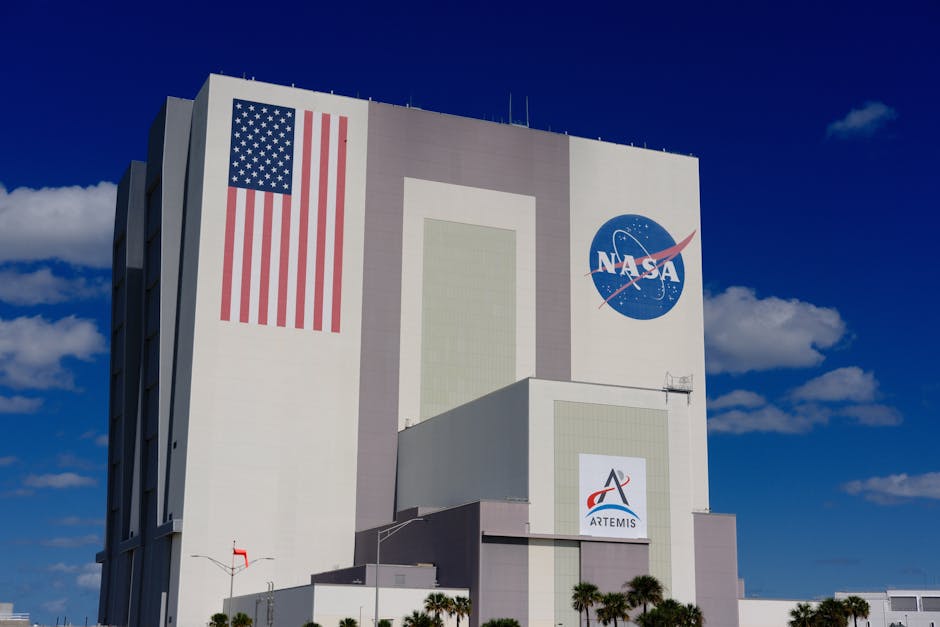

Netflix is preparing to live-stream NASA's Artemis II mission lunar flyby, a significant event in human space exploration, scheduled for April 6, 2026. This broadcast will offer viewers worldwide a direct feed of the Orion spacecraft's closest approach to the Moon, marking a new phase in crewed missions beyond Earth's orbit and highlighting the growing intersection of major streaming platforms with space coverage.
Key points
- Historic Crewed Mission: Artemis II is the first mission to send humans towards the Moon since the Apollo era, carrying four astronauts from NASA and the Canadian Space Agency.
- Lunar Flyby Broadcast: Netflix will provide live coverage of the Orion spacecraft's lunar flyby, a critical maneuver where the craft passes behind the Moon and uses its gravity to slingshot back towards Earth.
- Global Viewing Schedule: The live stream is set for April 6, 2026, with specific timings adjusted for various global time zones, making it accessible to audiences across North America, Europe, Asia, and Australia.
- Streaming Platform Involvement: This event underscores the increasing role of entertainment platforms like Netflix in delivering complex scientific and space exploration events directly to a global public.
- Crucial Test Flight: The Artemis II mission is a vital test of the Orion spacecraft and the Space Launch System, preparing for future lunar landings and eventual human missions to Mars.
What we know so far
Netflix has confirmed its plan to live-stream the lunar flyby segment of NASA's Artemis II mission on April 6, 2026. While the streaming giant did not broadcast the mission's initial launch, it is now set to provide direct access to the critical phase where the Orion spacecraft performs its closest pass by the Moon. The broadcast will draw directly from NASA's official feed, ensuring authentic and real-time visuals of this complex maneuver. For viewers in North America, the event is scheduled for 10:00 AM PT, 11:00 AM MT, 12:00 PM CT, and 1:00 PM ET. Audiences in South America can tune in at 2:00 PM BRT. Across the Atlantic, the UK and Europe will watch at 5:00 PM UTC, 6:00 PM BST, and 7:00 PM CEST. Further east, the Middle East and India will see the stream at 9:00 PM GST and 10:30 PM IST, respectively. Due to time zone differences, viewers in Japan (2:00 AM JST), Australia (3:00 AM AEST), and New Zealand (5:00 AM NZST) will experience the event early on Tuesday, April 7, 2026. The live stream will be available to Netflix subscribers through their platform interface, integrated alongside other content offerings. The Artemis II mission itself began with its liftoff on April 1, 2026, from the Kennedy Space Center, utilizing the powerful Space Launch System to launch the Orion spacecraft.
Context and background
The Artemis II mission represents a monumental step in humanity's renewed ambition for lunar exploration, serving as a critical precursor to future crewed landings on the Moon. This mission is part of NASA's broader Artemis program, which aims not only to return humans to the lunar surface but also to establish a sustainable presence there and eventually pave the way for human exploration of Mars. For decades since the conclusion of the Apollo program in the early 1970s, human spaceflight beyond low Earth orbit has remained a distant dream. Artemis II breaks this hiatus, sending four astronauts further into space than any human has traveled in over 50 years.
The crew of Artemis II comprises two NASA astronauts, Reid Wiseman and Victor Glover, and Canadian Space Agency (CSA) astronauts Jeremy Hansen and Christina Koch. Their mission aboard the Orion spacecraft is primarily a test flight, designed to validate the spacecraft's systems, life support, and heat shield performance under deep-space conditions. The Orion spacecraft, specifically engineered for long-duration missions beyond Earth orbit, is launched atop the Space Launch System (SLS), one of the most powerful rockets ever built. The SLS provides the necessary thrust to propel the Orion capsule and its crew far beyond Earth's gravitational pull and towards the Moon.
The lunar flyby itself is a pivotal moment in the mission. During this phase, the Orion spacecraft will travel approximately 10,200 kilometers (6,400 miles) beyond the far side of the Moon, reaching its maximum distance from Earth. This maneuver is not merely a scenic tour; it is a precisely calculated trajectory that uses the Moon's gravitational pull to alter the spacecraft's path, essentially providing a "gravity assist" to slingshot Orion back towards Earth. This technique conserves fuel and tests the navigation and control systems under real operational conditions. Passing behind the Moon also temporarily cuts off communication with Earth, testing the spacecraft's autonomous systems and the crew's ability to operate independently. The successful execution of this flyby is crucial for validating the flight plan and hardware before subsequent Artemis missions attempt lunar landings.
The decision by Netflix to stream this event live highlights a growing trend where major media and entertainment platforms are recognizing the public interest in space exploration. By broadcasting directly from NASA's official feed, Netflix is making complex scientific endeavors accessible to a broader, global audience, much like it does with other live events. This collaboration helps democratize access to space news and inspire a new generation of explorers and scientists.
What happens next
Following the successful lunar flyby, the Orion spacecraft will continue its trajectory back towards Earth, where it is expected to perform a high-speed re-entry into our planet's atmosphere. This return journey is another critical test, particularly for the spacecraft's heat shield, which must endure extreme temperatures upon deceleration. The crew's safe splashdown in the ocean will mark the completion of the Artemis II mission. The invaluable data collected during this approximately ten-day journey, from launch to re-entry, will be meticulously analyzed by NASA and its partners. This analysis will directly inform and refine the plans for Artemis III, the mission slated to land humans on the Moon, and subsequent missions aimed at establishing a sustained lunar presence. For now, the focus remains on the successful execution of the lunar flyby and the safe return of the four astronauts.
FAQ
- What is the Artemis II mission?
Artemis II is a crewed test flight by NASA and the Canadian Space Agency, sending four astronauts around the Moon and back, marking the first time humans have traveled beyond Earth orbit since the Apollo era. - When is the lunar flyby happening?
The lunar flyby is scheduled for April 6, 2026, with exact viewing times varying across global time zones. - How can I watch the live stream?
The live stream will be available to Netflix subscribers through their platform interface, broadcasting directly from NASA's official feed. - Why is the lunar flyby important?
The flyby is a critical test of the Orion spacecraft's systems, navigation, and trajectory, using the Moon's gravity to return to Earth, and is a vital step before future lunar landing missions. - Who are the astronauts on Artemis II?
The mission includes NASA astronauts Reid Wiseman and Victor Glover, alongside Canadian Space Agency astronauts Jeremy Hansen and Christina Koch.