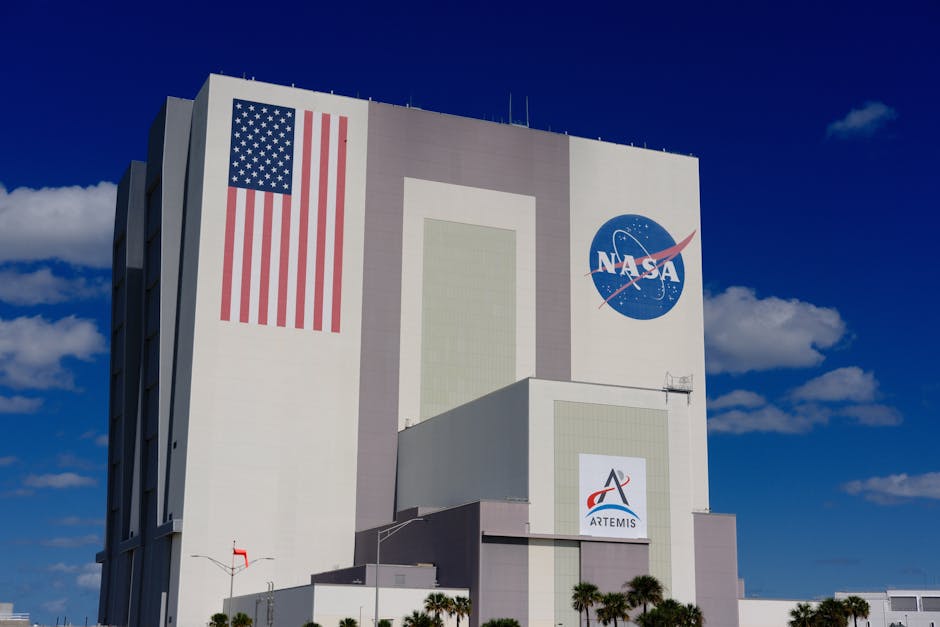

The Artemis II mission crew has embarked on a landmark journey around the Moon, marking humanity's return to Earth's closest celestial neighbor after more than five decades. Comprising Commander Reid Wiseman, Pilot Victor Glover, and Mission Specialists Christina Koch and Jeremy Hansen, the four astronauts initiated their seven-hour lunar flyby on Monday, April 6, at 1:30 PM EDT. This critical mission not only reintroduces humans to deep space exploration but also sees the crew surpass a long-standing record for the farthest distance humans have ever traveled from Earth, previously held by the Apollo 13 crew in 1970.
Key points
- The Artemis II crew, consisting of Commander Reid Wiseman, Pilot Victor Glover, and Mission Specialists Christina Koch and Jeremy Hansen, began a crucial seven-hour lunar flyby on Monday, April 6.
- During their journey, the astronauts are projected to break the 1970 record set by Apollo 13 for the maximum distance humans have traveled from Earth.
- This mission is the first time humans have journeyed to the vicinity of the Moon since Apollo 17 in 1972, serving as a vital precursor to future lunar landings.
- The crew is conducting extensive observations, including photographing lunar craters and mountains, and gathering data crucial for subsequent Artemis missions.
- Key events during the flyby include passing behind the Moon, experiencing "Earthset" and "Earthrise," reaching closest lunar approach, and observing a rare solar eclipse from a unique vantage point.
- The Orion spacecraft has successfully entered the Moon’s “lunar sphere of influence,” where lunar gravity exerts a stronger pull than Earth’s.
What we know so far
The Artemis II mission, a crewed test flight for NASA's ambitious lunar exploration program, commenced its significant Moon flyby on April 6. The four-member astronaut team—Commander Reid Wiseman, Pilot Victor Glover, and Mission Specialists Christina Koch and Jeremy Hansen—is at the forefront of this historic endeavor. Their journey around the Moon is scheduled to span approximately seven hours, beginning at 1:30 PM EDT (17:30 GMT).
A significant milestone in this mission is the expected surpassing of the human spaceflight distance record. Around 1:56 PM EDT, the Artemis II crew was slated to exceed the distance record established by the Apollo 13 crew in 1970, marking the farthest point from Earth ever reached by humans (252,706 miles). The mission's timeline includes several key events:
- Science Briefing: At 1:30 PM EDT, mission control briefed the crew on their scientific objectives for the flyby.
- Record-Breaking Distance: At 1:56 PM EDT, the crew was expected to surpass the Apollo 13 record.
- Lunar Observations Begin: Observations of the Moon's surface started at 2:45 PM EDT.
- Communication Loss/Earthset: Around 6:44 PM EDT, Mission Control anticipated a temporary loss of communication as the Orion spacecraft passed behind the Moon. Simultaneously, the crew would witness "Earthset," with Earth disappearing behind the lunar horizon.
- Closest Lunar Approach: Orion was projected to reach its closest point to the Moon, approximately 4,070 miles above the surface, at 7:02 PM EDT.
- Maximum Distance from Earth: The crew would achieve their maximum distance from Earth during the mission, reaching 252,706 miles, at 7:07 PM EDT.
- Earthrise/Communication Re-acquisition: By 7:25 PM EDT, "Earthrise" would occur as Earth reappeared, and Mission Control would re-establish communication.
- Solar Eclipse: Between 8:35 PM and 9:32 PM EDT, the crew was expected to observe a solar eclipse as the Sun passed behind the Moon from their unique vantage point.
- Lunar Observations Conclude: Scientific observations were scheduled to end at 9:20 PM EDT.
- Exiting Lunar Sphere: On Tuesday, April 7, at 1:25 PM EDT, Orion is expected to exit the Moon’s sphere of influence, approximately 41,072 miles from the Moon.
The astronauts have already expressed awe at the views of the Moon, with Commander Wiseman likening their reaction to "a bunch of kids." They are set to observe parts of the Moon previously unseen up close by Apollo crews, including the poles of the far side. The mission involves 10 science objectives and 35 specific targets for observation, with astronauts working in two-person shifts over five hours, using a tablet-based Lunar Targeting Plan app to record voice observations and capture potentially thousands of images of lunar features.
Context and background
The Artemis II mission represents a pivotal moment in humanity's renewed ambition for deep space exploration, specifically targeting the Moon as a stepping stone for future endeavors. For over 50 years, no human has ventured beyond low Earth orbit to the lunar vicinity since the Apollo 17 mission in 1972. The Artemis program, named after Apollo's twin sister in Greek mythology, aims not just for a fleeting visit but to establish a sustainable human presence on and around the Moon, ultimately preparing for crewed missions to Mars.
Artemis I, an uncrewed test flight of the Orion spacecraft and Space Launch System (SLS) rocket in late 2022, successfully demonstrated the hardware's capability to travel to the Moon and return safely. Artemis II builds directly upon this success, serving as the critical first crewed test flight. Its primary objective is to validate all the spacecraft's systems—including life support, communications, navigation, and environmental controls—with humans aboard, ensuring they can safely transport astronauts to deep space and back.
Breaking the human spaceflight distance record, previously held by the Apollo 13 mission, carries significant symbolic and practical weight. Apollo 13's record was set during an emergency trajectory that took the crew far around the Moon to slingshot back to Earth after a catastrophic in-flight anomaly. For Artemis II, reaching and surpassing this distance is a planned and controlled maneuver, demonstrating the robustness and reliability of modern space technology and the expanded capabilities of the Orion capsule designed for prolonged deep-space travel. This achievement underscores the progress made in space engineering and human resilience.
The scientific observations conducted during this flyby are also crucial. While Artemis II will not land on the Moon, the detailed imagery and data collected by the crew will inform future Artemis missions, particularly Artemis III, which aims to land astronauts on the lunar south pole. Understanding the lunar environment, identifying potential landing sites, studying geological features, and preparing for resource utilization are all vital aspects of building a sustainable lunar presence. The crew's unique perspective, including viewing the Moon's poles and a solar eclipse from beyond Earth, provides invaluable scientific insights that ground-based observations cannot match.
The concept of the Moon’s "lunar sphere of influence" is fundamental to orbital mechanics. It refers to the region where the Moon's gravitational pull is stronger than Earth's. As the Orion spacecraft enters this sphere, its trajectory becomes primarily governed by lunar gravity, a critical phase requiring precise navigation and control. This transition is a key test for the spacecraft's ability to operate autonomously and for mission control to manage its path in a dynamically challenging environment, reinforcing the mission's role as a comprehensive dress rehearsal for future lunar landings.
What happens next
Following the conclusion of lunar observations and the solar eclipse event on April 7, the Orion spacecraft, with its four-person crew, is expected to continue its trajectory away from the Moon. The critical next step, as per the mission timeline, is Orion's exit from the lunar sphere of influence, projected for 1:25 PM EDT on Tuesday, April 7. This signifies the point where Earth's gravity will once again become the dominant force influencing the spacecraft's path, guiding it back towards its home planet.
The successful completion of the Artemis II flyby will provide an immense trove of data. Engineers and scientists at NASA will meticulously analyze all aspects of the mission, from the performance of the Orion spacecraft and its life support systems to the effectiveness of communication protocols in deep space. The thousands of images and voice observations collected by the crew will be scrutinized to further refine understanding of the lunar environment, potentially identifying key regions for future landings and scientific study.
The insights gained from Artemis II are indispensable for the subsequent mission, Artemis III, which is planned to be the first human landing on the Moon since 1972. Artemis II serves as the ultimate crewed validation of the entire system before committing astronauts to a lunar surface expedition. The crew's firsthand experience, their feedback on the spacecraft's habitability, operational procedures, and the psychological aspects of deep-space travel, will be crucial in preparing for longer duration missions and the eventual establishment of a lunar base. The success of this flyby brings humanity significantly closer to a sustained presence on the Moon and lays the groundwork for future journeys to Mars.
FAQ
- What is the primary goal of the Artemis II mission?
The primary goal is to conduct a crewed test flight around the Moon, validating the Orion spacecraft's systems with astronauts aboard and preparing for future lunar landings. - Who are the astronauts on Artemis II?
The crew consists of Commander Reid Wiseman, Pilot Victor Glover, and Mission Specialists Christina Koch and Jeremy Hansen. - What record is the Artemis II crew breaking?
They are breaking the record for the farthest distance humans have ever traveled from Earth, previously set by the Apollo 13 crew in 1970. - Will Artemis II land on the Moon?
No, Artemis II is a flyby mission. Astronauts will orbit the Moon but will not land on its surface. The first human landing is planned for Artemis III. - Why is this mission important for future space exploration?
Artemis II is crucial for testing the spacecraft, life support, and operational procedures with humans, gathering vital data and experience needed to establish a sustainable human presence on the Moon and eventually send astronauts to Mars.