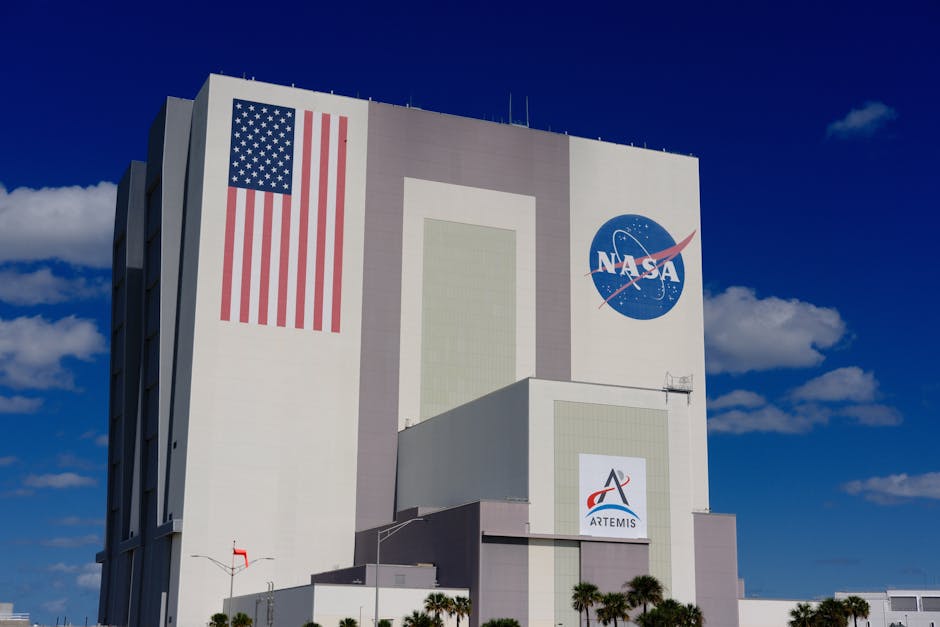

The Artemis II crew has successfully completed a historic lunar flyby, marking a significant milestone in human space exploration. During their journey, the four astronauts — Commander Reid Wiseman, Pilot Victor Glover, and Mission Specialists Christina Koch and Jeremy Hansen — surpassed the half-century-old record for the farthest distance humans have ever traveled from Earth, a mark previously held by the Apollo 13 mission. This pioneering mission, the first crewed journey to the Moon in over 50 years, saw the Orion spacecraft navigate complex maneuvers around Earth's natural satellite, collecting critical data and breathtaking imagery as part of NASA's ambitious plan to return humanity to the lunar surface and beyond.
Key points
- Record-Breaking Journey: The Artemis II crew traveled 252,706 miles from Earth, exceeding the 1970 Apollo 13 mission's record of 248,655 miles, establishing a new benchmark for human deep space travel.
- First Crewed Lunar Mission in Decades: This mission represents the first time humans have ventured towards the Moon since Apollo 17 in 1972, serving as a crucial test for future lunar endeavors.
- Extensive Lunar Observations: Astronauts engaged in seven hours of dedicated scientific observation, capturing images of both the near and far sides of the Moon and describing their unique views in real time.
- Critical Data Collection: The crew executed 10 science objectives targeting 35 different lunar features, utilizing a tablet-based app to record observations and potentially thousands of photographs of the lunar surface.
- Orion Spacecraft Performance: The mission validated the Orion spacecraft's systems, life support, and communication capabilities during its looping trajectory around the Moon and entry into its gravitational sphere of influence.
- Preparation for Future Missions: Data and experiences from Artemis II are vital for informing and de-risking the subsequent Artemis missions, including the planned human landing on the Moon.
What we know so far
On Monday, April 6, the Artemis II mission achieved several key objectives and milestones. The crew received a comprehensive briefing from the science officer at NASA’s Johnson Space Center in Houston regarding their scientific goals for the upcoming flyby, setting the stage for their observational work.
A pivotal moment occurred at 1:56 p.m. EDT (11:26 p.m. IST), when the Artemis II crew officially surpassed the distance record previously established by the Apollo 13 mission in 1970, confirming their status as the humans who have ventured farthest from Earth. Shortly after, at 2:45 p.m. EDT (12:15 a.m. IST on April 7), the crew initiated their comprehensive lunar observation period, which continued for approximately seven hours.
As the Orion spacecraft continued its trajectory, mission control anticipated a temporary loss of communication with the crew at 6:44 p.m. EDT (4:14 a.m. IST on April 7) as the vessel passed behind the Moon. Concurrently, at 6:45 p.m. EDT (4:15 a.m. IST on April 7), the crew experienced a phenomenon dubbed “Earthset,” where Earth appeared to glide behind the lunar disk from their vantage point.
The spacecraft reached its closest approach to the Moon at 7:02 p.m. EDT (4:32 a.m. IST on April 7), soaring approximately 4,070 miles above the lunar surface. Just five minutes later, at 7:07 p.m. EDT (4:37 a.m. IST on April 7), the crew achieved their maximum distance from Earth for the mission, registering 252,706 miles. This was swiftly followed by “Earthrise” at 7:25 p.m. EDT (4:55 a.m. IST on April 7), as Earth reappeared from behind the Moon, at which point mission control successfully re-established communication with the astronauts.
During their observations, the crew also witnessed a rare solar eclipse from beyond the Moon, which occurred between 8:35 p.m. and 9:32 p.m. EDT (6:05 a.m. to 7:02 a.m. IST on April 7). Lunar observations officially concluded at 9:20 p.m. EDT (6:50 a.m. IST on April 7). The following day, Tuesday, April 7, at 1:25 p.m. EDT (10:55 p.m. IST), the Orion spacecraft exited the Moon’s gravitational "lunar sphere of influence," approximately 41,072 miles from the Moon, continuing its journey back towards Earth.
Throughout their time near the Moon, the astronauts expressed profound awe. Commander Reid Wiseman conveyed to Mission Control, "The four of us have looked at the moon our entire lives, and the way we are responding to what we're seeing out the window is just like we're a bunch of kids up here. We cannot get enough of this. It's amazing." The crew focused on capturing unique views of the Moon, including regions near the poles on the far side, which were inaccessible to previous Apollo missions.
NASA's Artemis II lunar science lead, Kelsey Young, confirmed that the mission outlined 10 distinct science objectives and 35 specific targets for the crew. Working in two-person shifts over five hours of the main flyby, the astronauts used a specialized tablet application, the Lunar Targeting Plan app, to record voice observations and capture potentially thousands of photographs of lunar craters, plains, and mountains. The Orion spacecraft is currently on a trajectory that will bring it around the far side of the Moon and eventually back to Earth, having successfully entered the Moon’s gravitational sphere where its pull exerted a greater influence than Earth’s.
Context and background
The Artemis program represents NASA's ambitious initiative to re-establish a human presence on the Moon and lay the groundwork for future deep space exploration, including crewed missions to Mars. Named after the twin sister of Apollo in Greek mythology, Artemis builds upon the legacy of the Apollo program, which saw humans land on the Moon between 1969 and 1972. However, Artemis is designed with a more sustainable long-term vision, aiming to establish a consistent human and robotic presence on and around the Moon, fostering scientific discovery and technological innovation.
Artemis II is the second mission in this program and, critically, the first to carry a human crew. Its primary goal is not to land on the Moon, but to thoroughly test the Orion spacecraft’s systems, including its life support, navigation, communication, and heat shield, in a deep space environment similar to what astronauts would experience during a lunar landing mission. This uncrewed test flight is crucial for validating that the spacecraft can safely transport astronauts to and from lunar orbit before the more complex Artemis III mission, which is planned to return humans to the lunar surface.
The record broken by the Artemis II crew, surpassing the 248,655 miles from Earth achieved by Apollo 13, holds significant historical weight. The Apollo 13 mission in 1970 famously suffered a critical in-flight emergency, forcing its crew to loop around the Moon and return to Earth without landing. Despite the perilous circumstances, the mission demonstrated incredible resilience and ingenuity. For Artemis II to not only exceed this distance but to do so as part of a planned, successful test flight, underscores the advancements in space technology and mission planning since the Apollo era. It signifies humanity's renewed capability to venture further into the cosmos, pushing the boundaries of deep space travel.
The mission’s focus on extensive lunar observation is also vital. While the Apollo missions provided invaluable insights, Artemis II is collecting data from unique vantage points, including the Moon's polar regions and far side, which could harbor water ice and other resources critical for a sustained lunar presence. Understanding the deep space radiation environment, testing communication relays, and evaluating astronaut performance under these conditions are all integral to preparing for the complex challenges of living and working on the Moon for extended periods.
What happens next
Following its successful lunar flyby and exit from the Moon's gravitational influence, the Orion spacecraft is now on its trajectory back towards Earth. The crew will continue to monitor the spacecraft's systems and conduct any remaining operational checks as they prepare for re-entry into Earth's atmosphere. The mission is expected to conclude with a splashdown in the Pacific Ocean, where the crew and spacecraft will be recovered by NASA and its partners.
Upon their return, the extensive data collected during the Artemis II mission will undergo rigorous analysis. Engineers and scientists will meticulously review the performance of the Orion spacecraft, the effectiveness of the life support systems, the integrity of communications, and the scientific observations made by the crew. This information is paramount for refining designs, procedures, and training protocols for future Artemis missions.
The success of Artemis II serves as a critical stepping stone for Artemis III, which aims to be the first mission to land humans on the Moon since Apollo 17. The lessons learned from this flyby will directly inform the planning and execution of that historic landing, ensuring the safety and success of the astronauts who will walk on the lunar surface once again. Beyond Artemis III, the program envisions a sustained human presence on the Moon, including the development of a lunar Gateway space station and further exploration towards Mars, with each mission building upon the achievements of its predecessors.
FAQ
- What is the Artemis II mission?
Artemis II is the first crewed test flight of NASA's Artemis program, designed to orbit the Moon and return to Earth, validating the Orion spacecraft and its systems before humans land on the lunar surface. - Who are the astronauts on Artemis II?
The four-member crew consists of Commander Reid Wiseman, Pilot Victor Glover, and Mission Specialists Christina Koch (all from NASA) and Jeremy Hansen (from the Canadian Space Agency). - What record did Artemis II break?
The Artemis II crew surpassed the 1970 Apollo 13 mission's record for the farthest distance humans have ever traveled from Earth, reaching 252,706 miles. - Will the Artemis II crew land on the Moon?
No, the Artemis II mission is a flyby and will not land on the Moon. Its primary purpose is to test the Orion spacecraft and its systems in deep space. The Artemis III mission is planned to be the first to land astronauts on the lunar surface. - Why is this mission important?
Artemis II is crucial for testing the spacecraft, crew procedures, and communication in a lunar environment, gathering vital data, and preparing for future missions that will land humans on the Moon and eventually send them to Mars.