
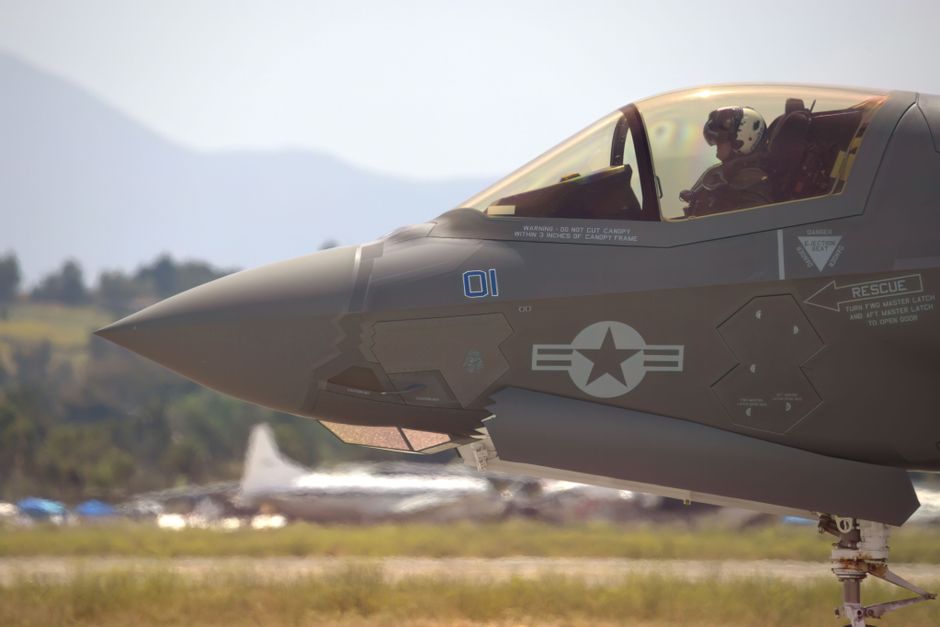
A recent incident in southern Isfahan, involving the alleged downing of a US F-15 fighter jet and the subsequent rescue of its two crew members, has sparked dramatically opposing interpretations from Washington and Tehran. While Iran declared the event a significant victory and a "bitter defeat" for the United States, President Donald Trump hailed the operation as one of the most audacious search-and-rescue missions in American military history, underscoring persistent and escalating tensions between the two nations.
Key points
- Iran claimed responsibility for downing a US F-15 fighter jet in Isfahan, celebrating the incident as a major blow to American military prestige.
- The US successfully rescued both F-15 pilots, with President Trump describing the operation as "daring" and a testament to US air dominance.
- Iran also asserted that its forces shot down additional US aircraft, including two Black Hawk helicopters and a C-130 transport plane, during the rescue mission.
- President Trump confirmed the deployment of numerous aircraft for the rescue, stating it was the first time two US pilots were separately rescued deep in "enemy territory."
- The incident unfolds amidst a broader, escalating conflict between the US and Iran, which has seen thousands of casualties and significant regional disruption since late February.
- International diplomatic efforts are underway by nations like Egypt and Pakistan to de-escalate the situation, warning of potential widespread regional instability.
What we know so far
On a recent Sunday, a US F-15 jet was reportedly involved in an incident over southern Isfahan, leading to the rescue of its two crew members. Iran's Khatam al-Anbiya Central Headquarters spokesperson, Ebrahim Zolfaghari, publicly claimed that Iranian forces were responsible for downing the F-15. Zolfaghari asserted that this event exposed the "hollow nature of the American military" and represented a "humiliating failure" for US forces. He further suggested that US President Trump was attempting to manipulate public opinion to justify what Iran considered a significant defeat.
Beyond the F-15, Iranian state media, citing the joint military command, reported that two Black Hawk helicopters and a C-130 transport aircraft, supposedly involved in the US rescue operation, were also shot down in Isfahan. Images purportedly showing smoke rising from a desert area were circulated. Additionally, reports indicated that Iranian tribesmen engaged American helicopters with gunfire during the rescue efforts.
From the US perspective, President Trump confirmed the successful rescue of the injured aviator and another pilot. He praised the mission as "one of the most daring Search and Rescue Operations in US History." Trump detailed that dozens of aircraft, equipped with "the most lethal weapons," were deployed after two Black Hawk helicopters were reportedly targeted by local Iranian forces. He emphasized the unprecedented nature of rescuing two US pilots separately from deep within what he termed "enemy territory," reaffirming the US commitment to never abandon its service members. President Trump also claimed the operation demonstrated "overwhelming Air Dominance and Superiority over the Iranian skies."
Context and background
This latest military encounter is not an isolated incident but rather a flashpoint within a rapidly escalating and complex conflict between the United States and Iran. The current phase of heightened tensions reportedly commenced on February 28 with joint US-Israel strikes, and has since spiraled into a broader regional confrontation. The implications of this conflict are far-reaching, extending beyond direct military engagements.
A significant consequence has been the tragic loss of life, with reports indicating thousands of casualties. The conflict has also severely impacted vital international shipping routes, most notably the Strait of Hormuz. This critical waterway, situated between the Persian Gulf and the Gulf of Oman, is a choke point through which a substantial portion of the world's oil supply passes. Disruptions here have immediate global economic repercussions, evidenced by the reported surge in fuel prices.
Concerns have also been raised about the conduct of hostilities, with both sides accused of striking civilian targets. Such actions raise serious questions regarding adherence to international humanitarian law and potential war crimes, drawing condemnation from human rights organizations and international bodies. The broader regional instability fueled by this conflict has created a volatile environment, making incidents like the F-15 event particularly sensitive and prone to differing interpretations, each side seeking to assert dominance and control the narrative.
The US maintains a significant military presence in the region, often citing the need to protect its interests and allies, and to counter what it perceives as Iranian aggression and destabilizing activities. Iran, on the other hand, views the US presence as an occupation and a threat to its sovereignty, often framing its actions as self-defense against foreign intervention. This fundamental disagreement over roles and intentions fuels the ongoing cycle of confrontation, with each military action, whether a strike or a rescue, becoming a battleground for propaganda and national pride.
What happens next
The immediate aftermath of the F-15 incident and pilot rescue suggests a continued state of high alert and potential for further military exchanges. However, there are also concerted diplomatic efforts underway to prevent the conflict from spiraling out of control. Regional powers, including Egypt and Pakistan, have reportedly engaged with both US and Iranian officials. These diplomatic initiatives aim to explore avenues for de-escalation, driven by a shared concern that the current trajectory could lead to an "unprecedented explosion" across the Middle East, with devastating consequences for regional and global stability.
Beyond the geopolitical implications, the ongoing hostilities are having a severe humanitarian impact. Aid agencies have issued urgent warnings that the conflict is significantly disrupting the delivery of essential food and medicine to vulnerable populations. The UN Food and Agriculture Organisation (FAO) has highlighted the dire potential consequences, estimating that if hostilities persist through June, an additional 45 million people could face acute hunger. This would exacerbate an already critical global food security situation, adding to the 320 million people worldwide already identified as being at risk.
Observers will be closely watching for any further military actions from either side, as well as the progress of diplomatic dialogues. The success or failure of these de-escalation efforts will largely determine whether the region moves towards a fragile peace or deeper into a widespread conflict with catastrophic human and economic costs. The rhetoric from both Washington and Tehran will also be crucial indicators of their willingness to compromise or continue on a confrontational path.
FAQ
- What was the main incident that occurred?
An F-15 fighter jet was reportedly downed in southern Isfahan, Iran, leading to a US rescue mission for its two pilots, which both nations interpreted very differently.
- How did Iran characterize the event?
Iran hailed it as a significant military victory and a "bitter defeat" for the United States, claiming it exposed the weakness of the American military.
- How did the US respond to the incident?
President Trump praised the rescue operation as "one of the most daring" in US history, affirming US commitment to its personnel and claiming "overwhelming Air Dominance."
- Are there other reported aircraft involved?
Iran claimed its forces also shot down two Black Hawk helicopters and a C-130 transport aircraft during the US rescue operation, a claim not explicitly confirmed by the US regarding the C-130.
- What is the broader context of this incident?
The incident is part of an escalating US-Iran conflict that began in late February, causing thousands of casualties, disrupting vital shipping routes like the Strait of Hormuz, and leading to a humanitarian crisis.


