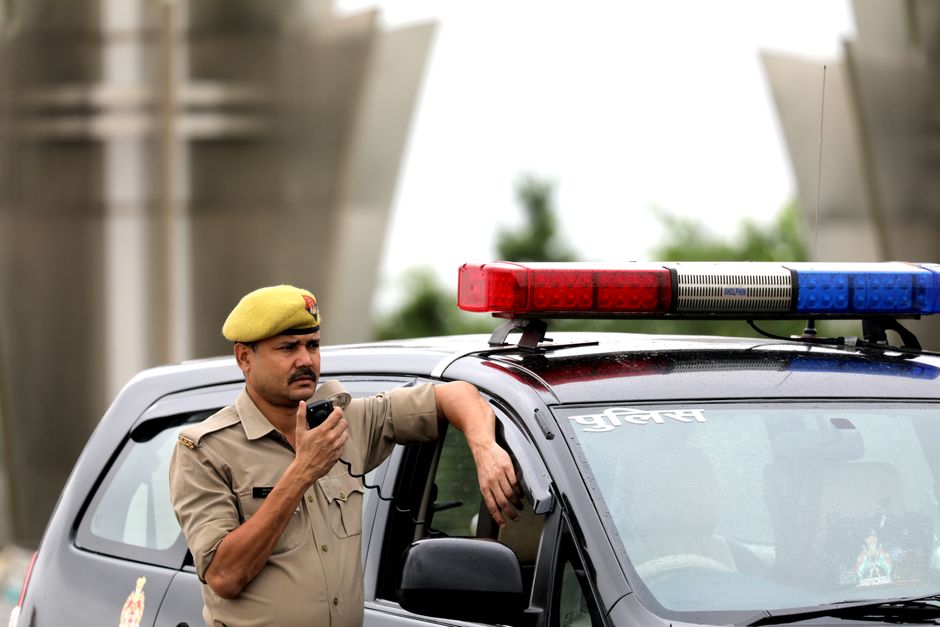

Punjab Police announced on Monday that it successfully dismantled a terror module allegedly backed by Pakistan's Inter-Services Intelligence (ISI), which was reportedly planning grenade attacks on police establishments across Punjab and other states. Three individuals have been apprehended in connection with the foiled plot, and law enforcement officials recovered two hand grenades and a Glock pistol during the operation.
Key points
- Punjab Police proactively foiled a terror plot attributed to an ISI-backed module.
- The alleged targets were police facilities in Punjab and potentially other Indian states, using grenade attacks.
- Three suspects—Sarabjit Singh, Bikramjit Singh, and Amandeep Singh—were arrested in a joint operation involving Punjab Police and Gujarat ATS.
- Investigators recovered two hand grenades, explicitly marked as Pakistan Ordnance Factory (POF) products, and a Glock pistol from the arrested individuals.
- Bikramjit Singh, identified as a key operative, was reportedly the primary contact for Pakistan Intelligence Operatives (PIOs) and was apprehended in Deesa, Gujarat.
- All accused were in communication with PIOs through various social media platforms, receiving instructions for the planned attacks.
What we know so far
According to statements released by Punjab Police, the intelligence-led operation successfully averted a significant security threat. Director General of Police Gaurav Yadav confirmed that the recovered grenades bore markings from the Pakistan Ordnance Factory (POF), strongly suggesting cross-border linkages to the plot. The initial investigation indicates that the ISI-backed module was systematically planning to target various police facilities. The three individuals arrested have been identified as Sarabjit Singh, a resident of Ammishah village in Tarn Taran district; Bikramjit Singh, from Nangal Pannuwan village in Amritsar; and Amandeep Singh, residing in Indra Colony, Amritsar.
Operational details shared by Assistant Inspector General Sukhminder Singh Mann of the State Special Operations Cell (SSOC), Amritsar, revealed that police teams initially apprehended Sarabjit Singh and Amandeep Singh, seizing the hand grenades and pistol. Further investigation uncovered that Bikramjit Singh, considered the key operative and direct contact for Pakistan Intelligence Operatives (PIOs), was operating from Deesa in Gujarat. This crucial information was promptly shared with the Anti-Terrorism Squad (ATS) Gujarat, whose active cooperation led to Bikramjit Singh's arrest. It was also confirmed that the accused utilized social media platforms to maintain communication with their handlers in Pakistan. An FIR has been formally registered under relevant sections of the Explosive Substances (Amendment) Act, the Arms Act, and the recently enacted Bharatiya Nyaya Sanhita (BNS) at the Police Station State Special Operation Cell (SSOC) in Amritsar. Police efforts are ongoing to identify, track, and apprehend any other members potentially associated with this module.
Context and background
The alleged thwarting of an ISI-backed terror plot in Punjab underscores the persistent security challenges faced by India, particularly from cross-border elements. The Inter-Services Intelligence (ISI) is Pakistan's premier intelligence agency, which India frequently accuses of supporting and sponsoring various terrorist groups and activities aimed at destabilizing the region. Such plots often leverage local sympathizers or radicalized individuals, using modern communication methods like social media to coordinate and issue instructions, as reportedly seen in this case.
Punjab, a border state, has historically been a focal point for security concerns, including instances of militancy and the nefarious activities of drug cartels often linked to cross-border networks. The state's proximity to the international border makes it vulnerable to infiltration and the smuggling of arms, explosives, and narcotics. The recovery of grenades with Pakistan Ordnance Factory (POF) markings provides tangible evidence of the alleged foreign origin of the weaponry and, by extension, the external backing for the module. POF is Pakistan's largest defense industrial complex, and its markings on recovered explosives are a common indicator of illicit arms proliferation from across the border.
Targeting police establishments is a particularly concerning tactic for terror groups. Such attacks aim not only to inflict casualties but also to undermine state authority, create widespread fear, and demoralize law enforcement agencies. It represents an attempt to challenge the very institutions responsible for maintaining peace and order. The revelation that the module planned to target facilities in "other states" highlights the potential for a broader, coordinated network and underscores the nationwide implications of such intelligence operations.
The collaborative effort between Punjab Police and Gujarat ATS in apprehending Bikramjit Singh in Gujarat illustrates the critical importance of inter-state cooperation and intelligence sharing in counter-terrorism operations. Modern terror networks often operate across state boundaries, making seamless coordination between different law enforcement agencies essential for effective disruption. The registration of the FIR under the new Bharatiya Nyaya Sanhita (BNS) also reflects the evolving legal framework for addressing such crimes in India.
What happens next
Following the arrests, the immediate next steps will involve intensive interrogation of the three apprehended individuals to extract further information about the module's full scope, its members, funding sources, logistical support, and any other planned attacks. Investigators will likely focus on tracing the full chain of command, from the on-ground operatives to their handlers within the Pakistan Intelligence Operatives (PIOs).
Police teams will continue their efforts to identify and apprehend any other individuals who might be associated with this module, whether as active members, facilitators, or sympathizers. This could involve extensive surveillance, digital forensics of recovered devices, and analysis of communication records. Security measures around police establishments and other potential high-value targets across Punjab and possibly other vulnerable states are expected to be reviewed and potentially enhanced to mitigate future threats.
Once the investigation is complete, a comprehensive chargesheet will be filed in court, leading to a trial under the provisions of the Explosive Substances (Amendment) Act, the Arms Act, and the Bharatiya Nyaya Sanhita. The case will serve as a testament to the ongoing vigilance required by security agencies to counter persistent cross-border threats and maintain national security.
FAQ
- What was the alleged terror plot?
The plot involved planning grenade attacks on police establishments in Punjab and potentially other states, allegedly orchestrated by an ISI-backed module.
- Who has been arrested in connection with the plot?
Three individuals identified as Sarabjit Singh, Bikramjit Singh, and Amandeep Singh have been arrested.
- What evidence was recovered by the police?
Police recovered two hand grenades, which bore markings from the Pakistan Ordnance Factory (POF), and a Glock pistol.
- How was the key operative, Bikramjit Singh, apprehended?
Bikramjit Singh, who was operating from Deesa in Gujarat and was the primary contact for PIOs, was arrested with the active cooperation of Gujarat ATS.
- What is the significance of the "ISI-backed module" claim?
The claim suggests external state sponsorship from Pakistan's Inter-Services Intelligence, indicating a cross-border dimension to the terror plot and a serious national security concern for India.