
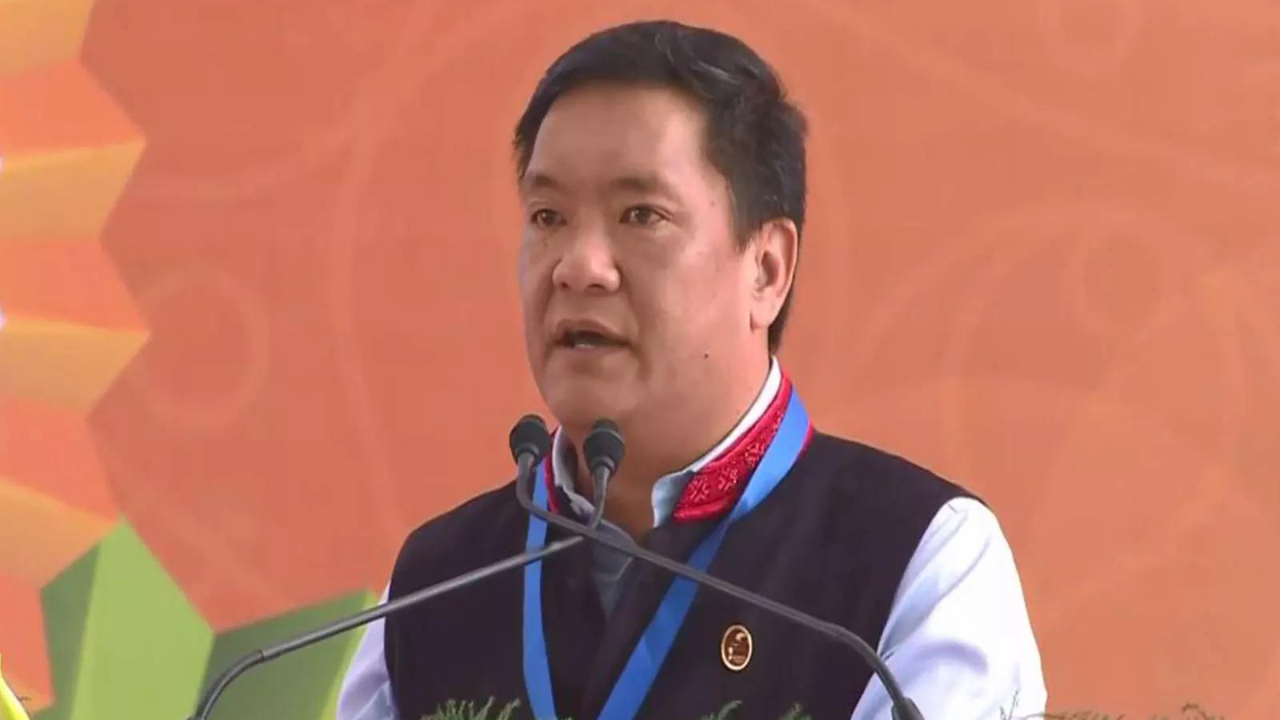
The Supreme Court of India has directed the Central Bureau of Investigation (CBI) to initiate an inquiry into serious allegations concerning the allocation of Public Works Department (PWD) contracts in Arunachal Pradesh. The probe will specifically investigate claims that these government contracts were awarded to firms that have direct links to relatives of the state's Chief Minister, Pema Khandu, raising questions about potential conflicts of interest and procurement irregularities.
Key points
- India's Supreme Court has mandated a CBI inquiry into PWD contracts in Arunachal Pradesh.
- The investigation focuses on allegations that firms connected to CM Pema Khandu's relatives received these contracts.
- The order highlights concerns regarding transparency and fairness in public procurement processes within the state.
- The CBI, a premier investigative agency, will now take over the probe, indicating the serious nature of the allegations.
- This development underscores the judiciary's role in ensuring accountability in government dealings.
What we know so far
The directive from the Supreme Court specifically orders the Central Bureau of Investigation to commence an inquiry. This inquiry is centered on allegations that contracts issued by the Public Works Department (PWD) in Arunachal Pradesh were not awarded solely on merit or through standard transparent processes. Instead, the claims suggest that these contracts were preferentially given to businesses or entities that maintain direct connections to family members or close relatives of the current Chief Minister of Arunachal Pradesh, Pema Khandu. The source text confirms the Supreme Court's order and the nature of the allegations linking PWD contracts to the Chief Minister's kin, but does not provide specific details about the number of contracts, their value, or the exact nature of the relationship between the firms and the CM's relatives.
Context and background
Public Works Departments (PWDs) across India are instrumental in a state's infrastructure development. They are responsible for a wide array of projects, including the construction and maintenance of roads, bridges, public buildings, and other critical civil infrastructure. Given the large budgets and significant public funds involved in these projects, PWD contracts are often substantial and require stringent procurement processes to ensure fairness, transparency, and value for taxpayer money. Allegations of irregularities in such departments are therefore taken very seriously, as they can indicate corruption, inefficiency, and a misuse of public resources.
The Supreme Court of India holds a crucial position as the highest judicial authority in the country. Beyond its appellate jurisdiction, the Supreme Court frequently exercises its powers to ensure justice, uphold the rule of law, and safeguard democratic principles. In cases where there are serious allegations of corruption or misconduct involving high-ranking public officials, and where state agencies might be perceived as lacking independence or capacity, the Supreme Court can intervene. Ordering an investigation by an independent central agency like the CBI is a significant step, reflecting the court's view on the gravity of the allegations and the necessity for an impartial probe.
The Central Bureau of Investigation (CBI) is India's primary investigative agency, tasked with handling complex and high-profile criminal cases, including those involving corruption, economic offenses, and organized crime. It operates under the jurisdiction of the Ministry of Personnel, Public Grievances and Pensions. The CBI is often called upon to investigate matters that transcend state boundaries or involve sensitive political figures, precisely because of its perceived independence and specialized investigative capabilities. When the Supreme Court directs the CBI to probe a matter, it signals a high level of concern and an expectation of thoroughness and impartiality in the investigation process. Such directives underscore the principle of accountability, ensuring that even those in the highest echelons of power are subject to legal scrutiny.
Allegations involving public officials and their relatives in government contracts frequently raise red flags regarding potential conflicts of interest. A conflict of interest arises when a person in a position of authority has a personal stake that could influence their professional decisions. In the context of government contracts, this could mean that decisions about who receives a contract might be swayed by personal relationships rather than the best interests of the public or the most competitive bid. Such situations erode public trust in governance and undermine the integrity of public institutions. Transparency and accountability in public procurement are fundamental pillars of good governance, aiming to prevent corruption and ensure that public funds are utilized efficiently and equitably for the benefit of all citizens.
What happens next
Following the Supreme Court's order, the Central Bureau of Investigation will now formally register a case, typically an FIR (First Information Report), to begin its investigation. The CBI's process generally involves several stages:
- Preliminary Inquiry: Initially, the CBI may conduct a preliminary inquiry to gather basic information and determine if there is sufficient prima facie evidence to warrant a full investigation.
- Detailed Investigation: If a case is registered, CBI officers will collect evidence, which may include examining PWD contract documents, financial records of the implicated firms, and communications.
- Witness Interrogation: Key individuals, including PWD officials, representatives of the allegedly linked firms, and potentially the Chief Minister's relatives, may be called in for questioning.
- Forensic Analysis: Depending on the nature of the allegations, forensic audits of financial transactions or technical evaluations of contract work might be undertaken.
- Report and Potential Charges: Upon completion of the investigation, the CBI will submit its findings. If sufficient evidence is found to support the allegations, charges may be filed against the involved individuals or entities in a special CBI court.
The legal implications for those found guilty could range from fines and imprisonment to disqualification from holding public office or participating in government contracts. Politically, such an inquiry, especially one involving the Chief Minister's kin, can lead to increased public scrutiny and potentially impact the credibility and standing of the state government. The process is likely to be time-consuming, and outcomes are not immediate. The case will be closely watched as it progresses through the investigative and judicial systems.
FAQ
- What is the CBI?
The Central Bureau of Investigation (CBI) is India's premier investigative agency, responsible for probing complex and high-profile criminal cases, including corruption, economic offenses, and organized crime. - Why did the Supreme Court order this inquiry?
The Supreme Court intervened due to serious allegations that Public Works Department (PWD) contracts in Arunachal Pradesh were awarded to firms linked to Chief Minister Pema Khandu's relatives, raising concerns about potential corruption and conflict of interest. - What are PWD contracts?
PWD (Public Works Department) contracts are agreements for public infrastructure projects such as roads, bridges, and government buildings, funded by taxpayer money and crucial for state development. - What does "allegations involving kin" mean?
It refers to claims that government contracts were preferentially given to businesses owned by or closely associated with family members or relatives of the Chief Minister, potentially indicating a conflict of interest or undue influence. - What are the next steps in the investigation?
The CBI will register a formal case, collect evidence, interrogate witnesses, potentially conduct forensic audits, and if sufficient evidence is found, file charges in court.