
New Delhi, India – As Prime Minister Narendra Modi recently concluded his visit to Tel Aviv, reports suggest that India and Israel are on the brink of signing a pivotal defense agreement. This landmark deal is anticipated to dramatically enhance the security relationship between these two strategic partners, focusing on the transfer of cutting-edge defense technologies rather than direct weapon sales.
During his address to the Israeli Parliament, the Knesset, Prime Minister Modi underscored the critical importance of a robust defense partnership between trusted allies like India and Israel, especially in today's unpredictable global environment.
Key Aspects of the Indo-Israel Defense Collaboration
According to Israeli media, the upcoming Memorandum of Understanding (MoU) on defense cooperation is structured around two primary areas:
1. Advanced Defensive Systems
Discussions are centered on acquiring and co-developing Israel's sophisticated air and missile defense capabilities. These include:
- Israel Aerospace Industries (IAI)'s Arrow Missile Defense System: A long-range anti-ballistic missile system.
- Rafael's David's Sling: Designed to intercept medium-range missiles and drones up to 300 km.
- Rafael's Iron Dome: Famous for its ability to intercept short-range rockets, effective from 4 km to 70 km.
- Rafael and Elbit Systems' Iron Beam: A powerful 100 kW laser system engineered to neutralize aerial threats within a 10 km range.
While the potential deals are significant, the involved Israeli companies have remained discreet about the specifics.
2. Offensive Weapon Technologies
Agreements are also expected, with some already finalized, concerning advanced offensive weaponry:
- Rafael's SPICE 1000 Guidance Kits: For precision-guided munitions.
- Elbit Systems' Rampage Air-to-Ground Missiles: High-precision standoff weapons.
- Ice Breaker Naval Cruise Missiles: Advanced long-range anti-ship and land-attack missiles.
- IAI's Supersonic Air LORA Missiles: A highly accurate air-launched ballistic missile.
India's Strategic Imperative: Fortifying Borders
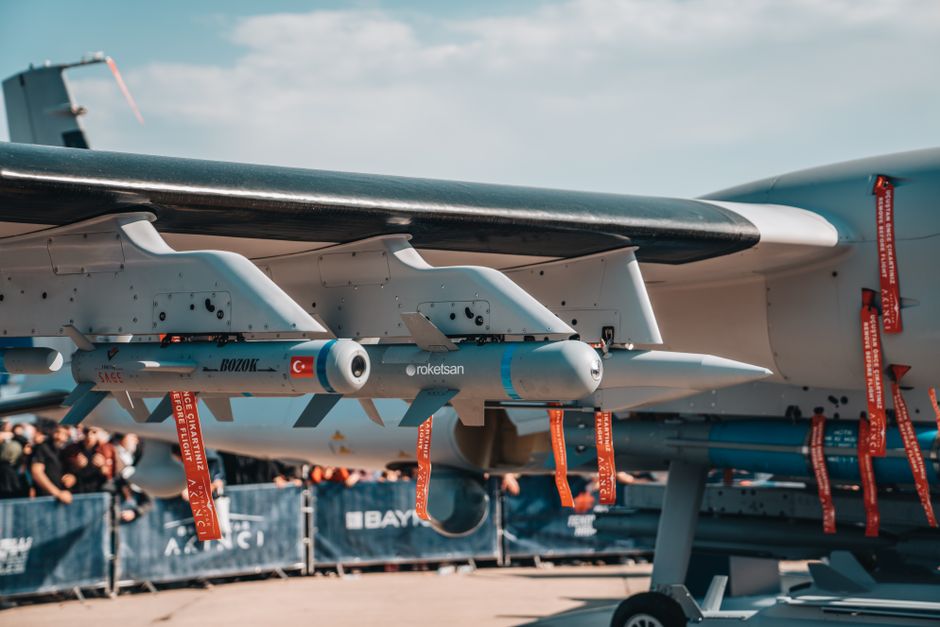
India's renewed push for advanced missile defense systems stems from recent border tensions, particularly the conflict with Pakistan last May. During that period, Pakistan reportedly deployed Turkish drones and Chinese PL-15 long-range air-to-air missiles, targeting Indian military and civilian assets. This event highlighted the urgent need for an impenetrable missile shield to protect India's vast 15,106-km land borders and 7,516.6-km coastline.
While India currently utilizes Russia's S-400 missile shield, Israel-developed Barak systems, and indigenous Akash systems, the nation seeks even more effective solutions like Israel's Iron Dome and Iron Beam to create a truly formidable defense. A key component of this strategic vision is the 'Make in India' initiative, aiming for technology transfer to domestically manufacture these advanced weapons. These systems are crucial for integration into India's ambitious "Sudarshan Chakra" project, a pan-India multi-layered shield planned for completion by 2035.
Future Acquisitions and Alliances
Potential Golden Horizon Missile Acquisition
Discussions may also include the acquisition of the Golden Horizon missile, believed to be the successor to the Sparrow target missile family. This unique weapon is designed for air-release and can be seamlessly integrated with the Indian Air Force's Sukhoi-30MKI jets. With an impressive strike range of 1,000-2,000 km and speeds reaching Mach 5, the Golden Horizon is built to penetrate fortified targets like underground bunkers and hardened military installations. Its extreme velocity makes interception by existing air-defense systems exceptionally challenging, significantly outpacing India's BrahMos cruise missile (Mach 3), widely considered the world's fastest operational supersonic cruise missile.
Iron Beam Laser Weapon System
India is also reportedly considering purchasing Israel’s advanced Iron Beam 100-kW-class laser weapon system. This system promises to significantly bolster India's air defenses against drones and missiles, offering a cost-effective solution at an estimated $2 per shot for its laser weapon.
Broader Security Alliance
A significant announcement anticipated from these high-level talks is the potential establishment of a broader security alliance. Israeli Prime Minister Netanyahu recently conveyed his vision to his cabinet, proposing India as a key player in a "hexagon of alliances" encircling the Middle East. This alliance would reportedly include Arab nations, African nations, Mediterranean nations (Greece and Cyprus), and other Asian countries. The objective, as stated by Netanyahu, is to unite against "radical axes" of Islam, particularly what he perceives as the threat from Iran's regime. This latest development underscores the evolving geopolitical landscape and the deepening strategic ties between India and Israel.