
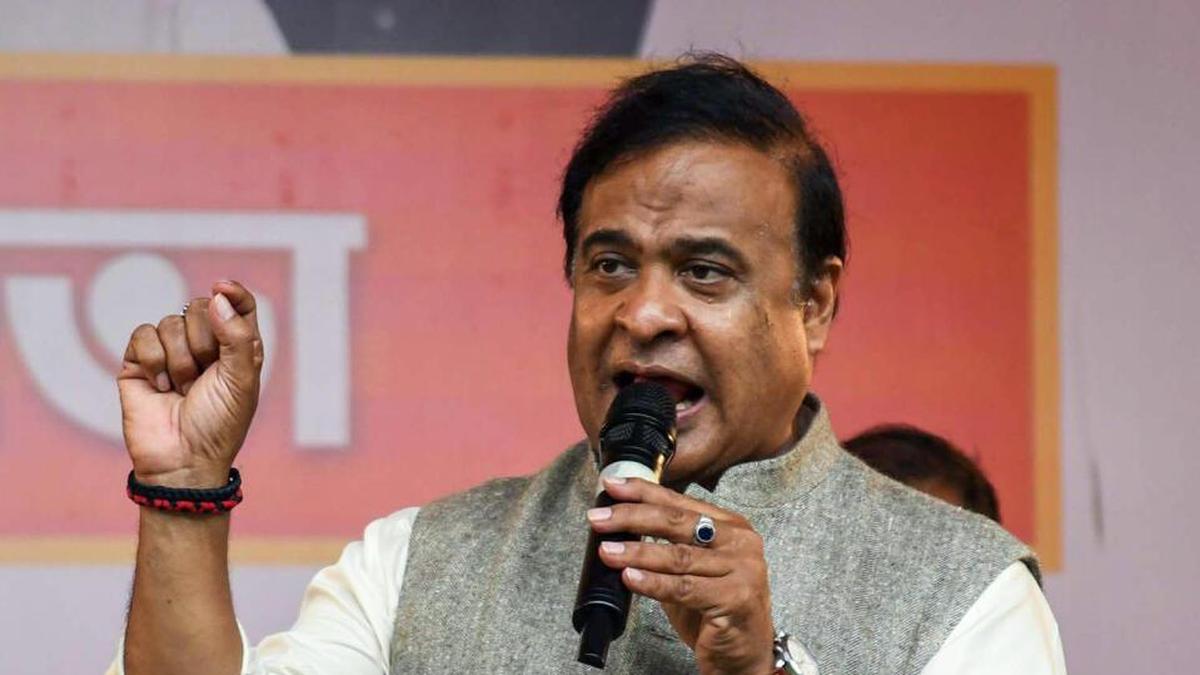
Assam Chief Minister Himanta Biswa Sarma has vehemently dismissed allegations made by the Congress party concerning his wife's passports, branding them as "false and fabricated." In a significant escalation of political rhetoric, CM Sarma further claimed that these accusations have a "Pakistani link," suggesting a deeper, potentially malicious motive behind the opposition's statements. The Chief Minister's strong rebuttal comes amidst ongoing political sparring between the ruling Bharatiya Janata Party (BJP) and the opposition Congress in the state.
Key points
- Assam CM Himanta Biswa Sarma explicitly stated that the Congress party's allegations regarding his wife's passports are "false and fabricated."
- In a serious counter-accusation, CM Sarma alleged that these claims by the Congress have a "Pakistani link."
- The specific details of the passport-related allegations made by the Congress party have not been publicly detailed in the source, beyond their general nature.
- This exchange highlights the intense political rivalry between the BJP, led by Sarma in Assam, and the opposition Congress party.
What we know so far
According to the Chief Minister of Assam, Himanta Biswa Sarma, the allegations put forth by the Congress party concerning his wife's passports are entirely baseless. He used strong language to describe them, calling the claims "false and fabricated." Furthermore, CM Sarma did not stop at a simple denial; he introduced a highly contentious element by asserting that there is a "Pakistani link" connected to these accusations. This implies a suggestion of foreign involvement or an agenda beyond typical political criticism. The source text does not provide specific details about the nature of the passport allegations themselves, only that they were made by the Congress party and concern the Chief Minister's wife.
Context and background
The political landscape in India, and particularly in states like Assam, is often characterized by robust and sometimes aggressive exchanges between ruling and opposition parties. The Bharatiya Janata Party (BJP), to which Chief Minister Himanta Biswa Sarma belongs, is the dominant political force at the national level and in many states, including Assam. The Indian National Congress, or Congress party, serves as the principal opposition, and its role often involves scrutinizing government actions and raising questions about public figures.
Allegations against political leaders and their family members are a common feature of this adversarial system. These claims can range from policy disagreements to accusations of corruption or impropriety, and they often become potent tools in the battle for public perception, especially with state elections or national elections on the horizon. The severity of such accusations can significantly impact a politician's image and credibility.
CM Himanta Biswa Sarma himself is a prominent and influential figure in Indian politics. Having previously been a member of the Congress party, he switched to the BJP in 2015 and rapidly ascended to become the Chief Minister of Assam, playing a crucial role in the BJP's expansion in India's northeastern region. His political acumen and strong leadership have made him a target for opposition criticism, just as he is a vocal critic of the opposition.
The introduction of a "Pakistani link" into the discourse elevates the seriousness of the accusation significantly. In India, any suggestion of involvement with Pakistan, especially in a negative or conspiratorial context, is extremely sensitive due to the historical tensions and geopolitical complexities between the two nations. Such claims are often used to question the patriotism or loyalty of individuals or groups, implying anti-national activities or foreign interference. This kind of rhetoric can quickly polarize public opinion and shift the narrative from the original issue to one of national security or allegiance. By alleging a "Pakistani link," CM Sarma is not just denying the passport allegations but also attempting to discredit the Congress party's motives by framing their actions as potentially seditious or influenced by external adversaries. This strategy aims to turn the tables on the accuser, putting them on the defensive and forcing them to justify their own claims in the face of a much graver counter-accusation.
The absence of specific details regarding the Congress's original passport allegations in the public domain, as per the source, means that the public's understanding of the initial complaint remains vague. This lack of clarity can allow both sides to frame the narrative in their favor, making it challenging for citizens to discern the full truth without further evidence or official statements.
What happens next
Following CM Sarma's strong denial and counter-allegation of a "Pakistani link," several developments are likely to unfold in the political arena. Firstly, the Congress party is expected to issue a robust response to the Chief Minister's claim, either reiterating their initial allegations with more details or vehemently denying any "Pakistani link" to their statements. This could lead to a further escalation of political rhetoric, with both parties doubling down on their positions.
There might be calls from various political groups, media, and civil society for both the Congress party to provide concrete evidence for their passport-related claims and for CM Sarma to substantiate his serious accusation of a "Pakistani link." Without substantiation, such grave allegations risk being perceived as mere political mudslinging, potentially eroding public trust in political discourse.
The incident is also likely to become a talking point in ongoing political debates and media discussions, influencing public perception in Assam and potentially beyond. Depending on how the situation develops, it could lead to formal complaints, investigations, or even legal action if either party decides to pursue the matter beyond public statements. The focus will be on whether either side can present verifiable facts to support their respective claims, moving the discussion beyond accusations to evidence-based discourse.
FAQ
- What are the allegations against the CM's wife?
The source indicates that the Congress party made allegations concerning Assam CM Himanta Biswa Sarma's wife's passports. However, the specific details or nature of these allegations are not confirmed in the provided information.
- Who made these allegations?
The allegations regarding the Chief Minister's wife's passports were made by the opposition Congress party.
- How did CM Himanta Biswa Sarma respond to the allegations?
CM Sarma strongly denied the allegations, labeling them as "false and fabricated." He also made a serious counter-accusation, claiming that the Congress's allegations have a "Pakistani link."
- What does "Pakistani link" imply in this context?
In Indian politics, an alleged "Pakistani link" is a very serious accusation that often implies foreign interference, anti-national activity, or an attempt to undermine national security or public trust, given the historical tensions between India and Pakistan.
- Is there any evidence presented for the "Pakistani link" claim?
The provided source text states CM Sarma made the allegation but does not include any details or evidence to substantiate his claim of a "Pakistani link."